

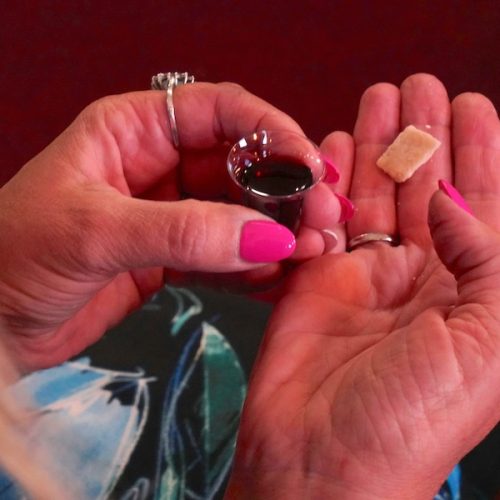
At a recent church staff meeting, we discussed how nearly all churches relegate communion to a monthly or quarterly practice instead of a weekly one. One of our staff said she visited a church in another state while on vacation, & was pleasantly surprised to learn they had weekly communion. But I told her I’d be shocked if they really did. So when we checked to verify, it became clear that they only had monthly communion after all.
Why do so few churches make it central like the first Christians did (Acts 2:42, 20:7)? Christ himself instituted it as a meal of unity, thanksgiving, fellowship, & commitment (Luke 22:19-20, 1 Cor. 11:23-29). It’s not just an optional thing to do. So on what grounds does it get relegated to something less important & less often?
The Roman Catholic Church made it the central act of worship throughout its history, but with an unbiblical, sacramental meaning. “Lay” or ordinary Catholics typically received communion rarely—often only once a year (around Easter). Meanwhile, clergy received it regularly. The “laity” didn’t widely begin receiving it weekly until well into the 20th century.
The Protestant Reformation altered communion’s frequency. Martin Luther advocated for frequent observance (initially calling for it to be daily or weekly), so lots of Lutheran churches do share in it weekly. But others only do it monthly. Most worldwide Anglican or Episcopal churches seem to have it weekly, too. John Calvin argued strongly for weekly communion, so certain Calvinist (Presbyterian & Reformed) churches have moved to weekly observance, though most have settled on quarterly communion.
Huldrych Zwingli & some other reformers viewed it more as a memorial, & were content with having it just 3-4 times per year. Some Methodist churches follow the influence of John Wesley who advocated for frequent communion (though monthly is more typical). Some independent & Scottish Baptists have it weekly, & in recent years, some independent & Evangelical Free churches have adopted weekly practice.
The Lord’s Supper was de-emphasized even more with the rise of revivalism in the 1800’s & more emphasis on singing & sermons. Dynamic preachers & song leaders became more prominent even though singing wasn’t even mentioned with the teaching, fellowship, prayer, & communion in Acts 2 when the Church began. Singing was present to some degree (Eph. 5:18-19, Col. 3:16), but in more recent decades the focus has shifted heavily to featuring lots of contemporary & “seeker-sensitive” styles of music. Such a focus on non-believers in services sidelined communion even more.
But churches like ours that share a heritage in the non-denominational Restoration Movement, which swept the American frontier of the 1800’s (what became the Midwest), became the only major non-liturgical (less formal, ceremonial & scripted; more flexible, free & simple) group in the U.S. to practice weekly communion. With a fervor to return to the faith & practices of the New Testament Church, they made weekly communion the hallmark of Sunday gatherings. In fact, it was this group that held the largest non-Catholic communion service ever documented in July 1986 at the Hoosier Dome in Indianapolis. Penny & I were privileged to participate along with some 45,000-60,000 others.
Some churches don’t have weekly communion because they believe it takes too much time. Can it still be meaningful without being rushed? I think so. At our church, an Elder (usually) takes a couple of minutes to offer an explanation, meditation, & prayer, with volunteers expeditiously distributing it down the rows, giving everyone time for personal reflection either before receiving (if seated in the back of the auditorium) or after receiving (if in the front).
Some may not do it weekly because it can be costly—especially pre-packaged communion kits. But if it’s important, then it’s worth it. And we’ve been blessed with servants who make our communion bread so we don’t have to buy it. To help with the modern hygienic concerns of everyone handling loose bread in a tray, we do have to buy double the number of cups so that gloved volunteers place the bread in one cup, & then stack a 2nd grape-juice-filled cup inside it.
If it’s observed weekly, isn’t the danger that it becomes commonplace? Sure, it’s possible, but that’s also possible with every other part of a worship service. It always depends on the heart of the worshipper, just as it does with singing & sermons. Are they taking it seriously or just ritualistically going through the motions? We don’t do other parts of the service less frequently to try to make them feel more “special.” Nor should we resort to tactics that try to induce emotional experiences or endlessly “top” such experiences. Churches that do it less often have the good intent to make it seem more special, but they miss the point. Frequent observance doesn’t make it common—infrequency & neglect do.
Other churches may desire to make services less spectatorish & more experiential by trying new & trendy things. But the Lord has already given us a way! Weekly communion can be a valuable experiential aid in keeping the wandering mind centered on the significance of the gospel (Christ’s atoning sacrificial body & blood) & our shared faith & unity in His spiritual body, the Church. In a world of relentless noise & distraction, it’s a time of quiet reflection. Even in the midst of a congregation, you’re alone with your thoughts & God. Once you grow used to this every week, & then attend another church that doesn’t do it, you realize how much you miss it.