

To understand salvation biblically, it’s crucial to understand prepositions. What is the source of salvation? God’s grace. We’re saved BY grace (not works). How do we access salvation? THROUGH faith (as the means of receiving it). Is it through faith “alone”? Do we “just” believe? Not really, because repentance is to accompany that faith. So it is THROUGH faith WITH repentance. How does baptism fit in? Salvation is IN baptism.
The word “in” is the critical preposition because, first, it is biblical (Col. 2:12). This is where the confusion comes in because Catholics & Lutherans tend to say we are saved BY baptism (as the means of receiving it). They would claim it’s a sacrament which infuses grace independent of personal faith in infants. This is often called “baptismal regeneration.” They add that older children must go through “Confirmation” to affirm their faith.
Meanwhile, many Protestant Reformed traditions see baptism as a means of grace & a seal of the covenant, so they do it to infants (substituting sprinkling for immersion like Catholics & Lutherans do). But they would say it doesn’t effect salvation. However, there’s no biblical teaching or precedent for any of these practices.
Other Protestants & Evangelicals who say that since we’re saved by grace alone through faith alone, also claim that baptism can have nothing to do with salvation. If “faith alone” is understood as opposed to faith + works, then they’re correct. The proper preposition when it comes to “works” is “for” – we’re saved not BY works, but FOR them (Eph. 2:10). Works are the fruit & evidence (James 2:26). But if they’re including baptism as a “work,” then it’s not accurate because Scripture never considers baptism a human work. Yes, it’s something we “do,” but so is faith. Jesus called faith a “work,” but it’s no more a meritorious work to earn salvation than baptism is (John 6:28-29). Both faith & baptism are God-appointed responses to HIs grace (1 Pet. 3:21). Jesus told us to make disciples by baptizing them–THEN teaching them to obey His commands, thus separating the unique saving act of baptism from other acts of obedience (Matt. 28:19-20).
But the 2nd reason that the preposition “in” (or “at”) is critical for baptism is because, it’s the normal occasion for salvation. It’s more rightly regarded as the time & place when & where God meets us with His promises. There are certainly exceptions when a person isn’t able to be immersed, which is why faith is absolutely essential while baptism is only relatively essential–that is, when it’s possible (Mark 16:16). But those exceptions shouldn’t be made the rule.
So the misunderstanding comes when people think that salvation is BY baptism (the source) or THROUGH baptism (the means). It is neither. This is not baptismal regeneration because it has no significance apart from faith. Since it is God’s gracious work, there’s no reason why it can’t be connected to salvation. Baptism was to immediately follow belief in order to receive the promises of forgiveness & the gift of the Holy Spirit (Acts 2:38, 41). That’s why it shouldn’t be delayed to a later public gathering or special occasion. It should be impromptu & immediate once faith & repentance have occurred (Acts 22:16, 8:12 & 36, 16:14-15 & 33).
In the late 1820s, as the Restoration Movement was spreading rapidly, Walter Scott emerged as one of its most effective evangelists on the American frontier in northern Ohio. He called Peter’s confession that “Jesus is the Christ, the Son of God” the “Golden Oracle” because it was a biblically concise way to confess saving faith (Matt. 16:16). The powerful & deceive moment in the recovery of the “ancient gospel” & “ancient order” was when he began to use a simple & memorable “5-finger exercise” to present the Gospel. He led thousands to Christ with it.
His fingers represented: Faith, Repentance, Baptism, Remission of sins, & Gift of the Holy Spirit. He later elaborated the fuller “Gospel Restored” with a 6-part understanding of God’s part & man’s part. The 3 human responses to God’s gracious offer were to believe, repent & be baptized. God then bestowed 3 promises of forgiveness, the gift of the Holy Spirit, & eternal life. Some later adaptations by others would make the 5 fingers: Hear, Believe, Repent, Confess, & Be Baptized. This places the emphasis exclusively on our responses without His promises. That’s a fine model too, but it seems unnecessary to include “hearing” & “confessing” (faith verbalized – Rom. 10:9).
I adapted those concepts myself in the late 1990’s with the method I called “2 Verses & 6 Fingers” (which was published as an article in “Christian Standard” magazine). The 2 verses of John 3:16 & Acts 2:38 outline those same 3 responses & promises. But as I continued to incorporate other evangelistic methods such as the “4 Spiritual Laws” (Bill Bright & Cru), the Romans Road (verses from the book of Romans), the Bridge to Life (Dawson Trotman & Navigators), & “Do vs. Done” (popularized by Bill Hybels & used by Cru), I combined them into what I called “The 3’s Plan of Salvation” a few years ago (you can see it here: southpoint.church/about-us/the-3s, or pick up pamphlets in our church lobby).
I begin with 3 Facts that summarize the Gospel, which is modeled on the first 3 of the “4 Spiritual Laws”: 1) The Premise: God made & loves you. 2) The Problem: The bad news is that sin separates you from God. 3) The Remedy: The Good News (Gospel) is that Jesus Christ redeems & reconciles you to God. I reference several verses based mostly on The Romans Road. I use the Bridge to Life illustration of a chasm depicting sinners on one side & God on the other side. Then I bring in the “Do vs. Done” part of the presentation – that nothing we DO (works & religions) can span that Grand Canyon of sin, & spiritual separation, which leads to hell. Only what Jesus has DONE on the cross can provide a bridge to life.
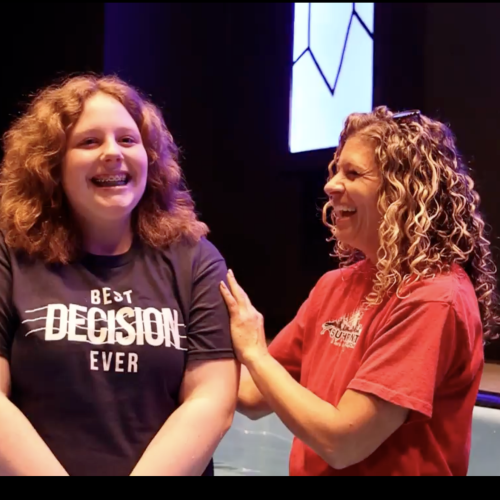
I then present the 3 Responses (because most evangelistic methods leave out baptism) & 3 Promises. I use this regularly as part of my Sunday message invitation to make the Best Decision Ever! I do this not only because I want unbelievers to hear a clear presentation (over many years, baptisms take place practically every week), but because I want Christians to hear it so often that they’re able to repeat it to others who want to know how to be saved (Acts 16:31, 2:38). Just make sure you get those prepositions right!